How to Choose a Shower System for Your Bathroom (2026 Guide)
Choosing a shower system is one of the few home upgrade decisions that affects your daily life every single morning — and one of the most common sources of buyer regret when the wrong system is chosen. The wrong shower head for your water pressure delivers a disappointing experience no matter how much you spend. The wrong valve type means temperature surprises every time someone uses another faucet in the house. The wrong installation type means unexpected renovation costs after the purchase decision is already made.
The good news is that choosing the right shower system is straightforward once you understand the five factors that actually determine whether a system will work well in your specific home. This guide walks through each of those factors in the order you should consider them — because getting the sequence right prevents the most common and expensive shower system mistakes.
Step 1 — Check Your Water Pressure Before Anything Else
Water pressure is the most important factor in shower system selection and the one most buyers skip entirely. Choosing a shower system without knowing your home’s PSI (pounds per square inch) is the fastest way to end up with an expensive, disappointing installation.
Testing your pressure takes five minutes and costs under $15. A standard pressure gauge from any hardware store connects to an outdoor hose bib — turn the shower and one other fixture on simultaneously, then read the gauge. This gives you your realistic in-use pressure rather than the peak supply pressure.
| Pressure Level | PSI Range | Compatible Systems | Avoid |
|---|---|---|---|
| Very Low | Below 30 PSI | Pressure-optimized compact heads only | All rainfall systems, multi-outlet |
| Low | 30–45 PSI | Dual systems, compact rainfall (8 inch) | Large rainfall heads (12 inch+) |
| Standard | 45–65 PSI | All systems — most homes fall here | Nothing — all types viable |
| High | 65–80 PSI | All systems including large multi-outlet | Nothing — consider a pressure regulator if above 80 |
If your home runs below 40 PSI, see our dedicated guide to best shower systems for low water pressure before continuing — the system type recommendations there are specifically calibrated for limited pressure conditions.
Step 2 — Choose the Right Shower System Type
There are five main shower system types and each suits a different combination of bathroom size, pressure level, budget, and daily use pattern. Understanding the real-world difference between them — not just what they look like in photos — prevents the most common purchase regrets.
Single Shower Head System
The simplest and most affordable configuration — a single fixed head connected directly to the wall supply line. Works in any bathroom at any pressure level above 25 PSI. The right choice for a guest bathroom, a second bathroom used occasionally, or any renovation where budget is the primary constraint. There is nothing wrong with a single shower head done well — a quality Speakman or Moen fixed head at 45 PSI delivers a better daily shower than a cheap dual system at the same pressure.
Dual Shower System (Fixed + Handheld)
Combines a fixed overhead head with a handheld unit on a slide bar — the most versatile configuration for everyday residential use. The fixed head provides consistent overhead coverage while the handheld gives flexibility for rinsing, bathing children or pets, and targeting specific areas. This is the configuration most recommended by plumbers for primary bathroom installations because it serves the widest range of daily needs without requiring high water pressure to run both heads simultaneously.
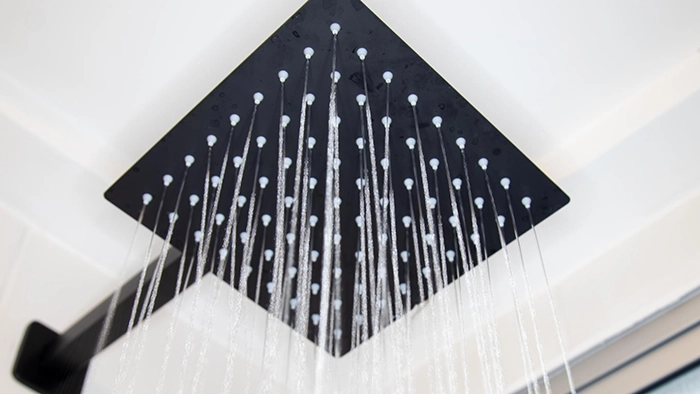
Rainfall Shower System
A large overhead head — typically 8–16 inches in diameter — that delivers wide, even water coverage simulating rainfall. The experience genuinely feels different from a standard shower head and is the most common driver of primary bathroom renovations. The critical requirement is water pressure — rainfall heads need 45+ PSI for a satisfying experience, with larger heads requiring 55+ PSI for full, even coverage. At pressure below this threshold, rainfall systems produce a thin, weak drizzle that is more frustrating than appealing.
Multi-Function Shower System
Combines multiple spray sources — overhead rainfall, body jets or body sprays, and a handheld unit — controlled through a diverter or thermostatic valve. This configuration delivers the closest residential equivalent to a spa shower experience. The requirement is both adequate water pressure (typically 60+ PSI for all outlets running simultaneously) and a thermostatic valve system to maintain temperature while multiple outlets are active. Multi-function systems are also the most complex and expensive to install, typically requiring professional plumbing work and wall access for supply line routing.
Smart / Digital Shower System
Digital thermostatic systems that use electronic controls — touchscreen panels, app integration, voice control — to set precise temperature, activate multiple outlets, and save personalized user preferences. Kohler’s DTV+ and Moen’s U by Moen are the leading residential options. These systems deliver the most refined shower experience available but require professional installation, electrical access, and a significantly higher investment than mechanical systems.
Step 3 — Choose the Right Valve Type
The valve is the most important internal component in any shower system — it determines temperature stability, safety, and how the system performs when water pressure fluctuates elsewhere in the home. Most buyers focus on the shower head design and overlook the valve entirely, which is backwards. A beautiful shower head on a poor-quality valve delivers a mediocre shower experience every day.
Pressure-Balanced Valve
The standard valve type in most residential shower systems. A pressure-balanced valve maintains a consistent ratio between hot and cold water supply, preventing sudden temperature spikes when other fixtures activate — when a toilet flushes or a dishwasher fills. It does not maintain a precise temperature, but it prevents the dangerous scalding or freezing shock that unbalanced valves allow. Pressure-balanced valves are required by plumbing code in most US states for all residential shower installations. They are simpler, more affordable, and easier to maintain than thermostatic alternatives.
Thermostatic Valve
Maintains a precise water temperature electronically or mechanically regardless of supply pressure changes. Once you set your preferred temperature, a thermostatic valve delivers it consistently every time — even during peak household water demand. This is the valve type used in all digital shower systems and recommended for multi-outlet configurations where multiple spray sources must maintain consistent temperature simultaneously. Thermostatic valves cost significantly more than pressure-balanced alternatives and require more complex installation, but deliver a noticeably more refined shower experience.
Step 4 — Match Installation Type to Your Renovation Scope
Installation type determines how much plumbing work your shower system choice requires — and by extension, how much of your budget goes to labor versus the fixture itself. This is the factor most buyers underestimate when planning a shower upgrade.
Wall-Mount Arm (Most Common)
The shower head connects to an arm extending from the wall, which connects to a supply fitting behind the wall. This is the standard configuration for most residential shower systems and the one with the lowest installation complexity. Replacing an existing wall-mount system with a new one — even a rainfall head with a longer arm — typically requires no new plumbing work beyond disconnecting the old arm and connecting the new one. DIY-accessible for most homeowners with basic plumbing experience. Installation time: 30–90 minutes.
Ceiling-Mount
The supply line runs up through the wall and across the ceiling to a ceiling-mounted rainfall head. This creates the most authentic overhead rainfall experience — water falls perfectly vertically rather than at the slight angle of a wall-arm system. The trade-off is installation complexity: ceiling-mount requires opening the ceiling to route supply lines, which typically costs $300–$800 in additional plumbing labor beyond the fixture itself. Only recommended for full bathroom renovations where the ceiling is already open or accessible.
Concealed / Recessed Systems
The valve body and supply connections are installed inside the wall, with only the control handle and shower head visible. This creates the cleanest aesthetic — no exposed pipework — and is the configuration used in premium hotel-style bathroom designs. Concealed systems require more precise rough-in work and are almost always a professional installation. They are also the most expensive to service when the valve eventually needs maintenance, as wall access is required.
Step 5 — Plan Your Budget Realistically
Shower system budgets have two components that buyers frequently conflate: the fixture cost and the installation cost. Planning for both upfront prevents the most common renovation budget surprise.
| Budget Tier | Fixture Cost | Install Cost | What You Get |
|---|---|---|---|
| Entry | $50–$200 | DIY or $50–$100 | Single or basic dual system, standard valve |
| Mid-Range | $200–$600 | $100–$300 | Quality rainfall or dual system, pressure-balanced valve |
| Premium | $600–$1,500 | $200–$500 | Multi-outlet system, thermostatic valve, quality brand |
| Luxury | $1,500–$5,000+ | $500–$1,500+ | Digital thermostatic, Kohler DTV+ or Moen U, full spa experience |
The mid-range tier ($200–$600 fixture) represents the best value for most primary bathroom renovations — it covers all the quality rainfall and dual systems from trusted brands like Moen, Delta, and SR SUN RISE that deliver genuinely satisfying daily shower experiences without requiring professional installation for wall-mount configurations.
Step 6 — Prioritize Build Material Over Brand Name
The material your shower system is made from determines how long it performs well — and in shower environments where daily humidity, temperature cycling, and mineral deposits are constant, material quality matters more than it does in almost any other bathroom fixture category.
Solid brass valve body is the most important material specification in any shower system. Brass resists corrosion, handles hard water mineral deposits without internal degradation, and maintains dimensional stability under daily temperature cycling. A shower system with a solid brass valve body and a ceramic disc cartridge should deliver consistent performance for 10–20 years in normal residential use.
Stainless steel shower arms and heads are the preferred material for exposed components — more resistant to tarnishing and corrosion than chrome-plated zinc alloy alternatives. In hard water areas especially, the difference in finish appearance after 3–5 years between stainless steel and plated zinc components is significant.
Rubber or silicone nozzles on the shower head face are preferable to fixed plastic nozzles for maintenance — mineral deposits wipe off silicone nozzles with a cloth, while plastic nozzles require soaking and scrubbing. Most mid-range and premium shower heads use silicone nozzle designs for this reason.
Avoid zinc alloy valve bodies at any price point. Zinc alloy looks identical to brass in product photos but corrodes significantly faster under the mineral deposit and humidity conditions of daily shower use. Always check the valve body material specification before purchasing — if it is not listed as brass, assume it is zinc alloy or plastic.
Step 7 — Match System Design to Your Bathroom Style
Shower system design should complement your existing bathroom aesthetic — choosing a mismatched style creates visual inconsistency that affects the overall feel of the space even when the functional performance is excellent.
Modern / Contemporary
Ceiling-mount or wall-arm rainfall with a sleek profile. Matte black or brushed nickel finishes. Concealed valve configuration. Collections: Delta Trinsic, Moen Align, Kohler Composed.
Traditional / Classic
Wall-mount arm with round or cross-handle controls. Polished chrome or oil rubbed bronze finish. Classic shower head profile. Collections: Moen Brantford, Delta Cassidy, Kohler Bancroft.
Transitional
Combines classic proportions with modern finishes. Brushed nickel or champagne bronze. Rectangular shapes with curved detailing. Collections: Moen Voss, Delta Stryke, Kohler Devonshire.
Luxury / Spa
Multi-outlet systems with body jets, large ceiling rainfall, thermostatic controls. Vibrant brushed gold or polished nickel. Concealed installation essential. Collections: Kohler Statement, Moen U by Moen.
Finish consistency tip: Match your shower system finish to your bathroom faucet and hardware — chrome, brushed nickel, matte black, and oil rubbed bronze all look best when consistent across all fixtures in the same bathroom. Mixing finishes in the same space creates visual inconsistency that is difficult to correct after installation.
Common Mistakes to Avoid When Choosing a Shower System
- Skipping the water pressure test. Choosing a system without knowing your PSI is the single most common cause of shower system disappointment. A $400 rainfall system at 30 PSI performs worse than a $60 compact head at the same pressure. Test pressure first — everything else follows from that number.
- Choosing the installation type after the fixture. Different shower systems require different rough-in configurations. Buying a ceiling-mount system for a bathroom where the ceiling is not accessible, or a concealed valve system for a renovation where opening the wall is not planned, creates expensive post-purchase complications. Determine installation type first, then choose the fixture.
- Buying a multi-outlet system without thermostatic valve. Running two or more shower outlets simultaneously with a pressure-balanced valve causes temperature swings as pressure shifts between outlets. Multi-outlet systems need thermostatic valves to maintain consistent temperature — buying the heads without the right valve type produces a frustrating result.
- Prioritizing appearance over valve and material quality. Two shower systems can look nearly identical at the same price. The difference is in the valve material (brass vs zinc), the nozzle design (silicone vs plastic), and the build quality of internal components. Always check material specifications before purchasing based on appearance alone.
- Underestimating installation cost. Fixture price is only part of the total cost. Wall-mount replacement is often DIY-accessible. Ceiling-mount, concealed systems, and multi-outlet installations typically require professional plumbing. Budget for installation before finalizing the fixture choice to avoid post-purchase surprises.
Quick Decision Guide — Find Your System in 60 Seconds
Below 40 PSI water pressure
Choose a pressure-optimized compact head or small dual system. See our low pressure guide. Avoid rainfall systems entirely at this pressure.
Budget under $300, 40–65 PSI
Dual system with pressure-balanced valve. Best all-around value. See our under $500 rainfall guide for top picks.
Primary bathroom upgrade, 45+ PSI
Rainfall system with 10–12 inch head and pressure-balanced valve. Mid-range budget delivers excellent results. Check our shower systems guide for brand recommendations.
Master bathroom renovation, 55+ PSI
Multi-outlet system with thermostatic valve. Compare Kohler vs Moen for premium brand decisions at this tier.
Frequently Asked Questions — Choosing a Shower System
What is the best shower system for most homes?
For most primary bathrooms with standard water pressure (45–65 PSI) and a mid-range renovation budget, a dual shower system — combining a 10–12 inch rainfall overhead head with a handheld unit on a slide bar — delivers the best combination of coverage, flexibility, and daily satisfaction. Paired with a pressure-balanced valve from a quality brand like Moen, Delta, or SR SUN RISE, this configuration performs reliably for 10–15 years with minimal maintenance. It is the configuration most recommended by professional plumbers for primary residential bathrooms.
Do I need a plumber to install a shower system?
It depends on the system type and installation configuration. Wall-mount replacement systems that connect to existing supply fittings are generally DIY-accessible — most handy homeowners complete the installation in 1–3 hours without professional help. Ceiling-mount systems, concealed valve configurations, and multi-outlet systems that require new supply line routing inside the wall typically need a licensed plumber. When in doubt, consult a plumber for the rough-in work and handle the trim installation (connecting the head and handle to completed rough-in) yourself to save on labor cost.
Is a thermostatic valve worth the extra cost?
A thermostatic valve is worth the additional investment specifically for multi-outlet shower systems and for households with young children or elderly users where precise temperature consistency is a safety priority. For single or dual head systems in standard residential use, a quality pressure-balanced valve provides adequate temperature stability at significantly lower cost. The price difference between a pressure-balanced and thermostatic valve is typically $200–$600 — worthwhile for a premium multi-outlet installation, but difficult to justify for a basic dual head setup.
How long should a quality shower system last?
A quality shower system with a solid brass valve body, ceramic disc cartridge, and stainless steel components should last 10–20 years in normal residential use with basic maintenance — annual nozzle cleaning in hard water areas and cartridge replacement every 7–12 years. Budget systems with plastic or zinc alloy components typically show performance degradation within 3–5 years. The valve body material is the single most important durability indicator — always verify brass construction before purchasing.
What shower system finish holds up best long-term?
PVD (Physical Vapor Deposition) finishes are the most durable available — used by Kohler on their premium lines, PVD coatings resist tarnishing, corrosion, and scratching significantly better than standard electroplated chrome or brushed nickel. Among standard finishes, brushed nickel holds up better than polished chrome in humid shower environments because it shows water spots and mineral deposits less visibly. Matte black is increasingly popular and performs well in moderate hard water areas, though it can show mineral deposits more prominently in very hard water conditions. For hard water areas, Moen’s Spot Resist brushed nickel is one of the best performing standard residential shower finishes available.
Final Recommendation — How to Choose the Right System for Your Bathroom
Work through the steps in this guide in order — pressure first, system type second, valve third, installation fourth, budget fifth — and the right shower system for your bathroom will become clear before you look at a single product listing.
For most homeowners — standard residential pressure, primary bathroom renovation, mid-range budget — a dual rainfall system with a pressure-balanced valve from Moen, Delta, or a quality mid-range brand is the recommendation that consistently delivers the best result across the widest range of situations. It works at standard pressure, installs without professional help in most cases, and delivers daily shower satisfaction for a decade or more.
For specific product recommendations by shower system type, use these guides:
- Best rainfall shower systems under $500 — top picks for standard pressure homes on a mid-range budget
- Best shower systems for low water pressure — specifically calibrated for under-40 PSI homes
- Kohler vs Moen shower systems — premium brand comparison for master bathroom budgets
- Are rainfall shower systems worth it? — honest assessment of rainfall systems for your specific situation