Best Shower System for Low Water Pressure (2026 Guide)
A weak shower is one of the most frustrating daily experiences in any home — and low water pressure is the most common cause. What makes it worse is that most homeowners assume the fix requires expensive plumbing work: new pipes, a pressure booster pump, or a full bathroom renovation. In most cases, that assumption is wrong.
The single most effective and most affordable improvement for a weak shower is choosing the right shower system — specifically one engineered to work with lower pressure rather than against it. The difference between a poorly matched shower head and a pressure-optimized one can be dramatic, even when the underlying water pressure in your home stays exactly the same.
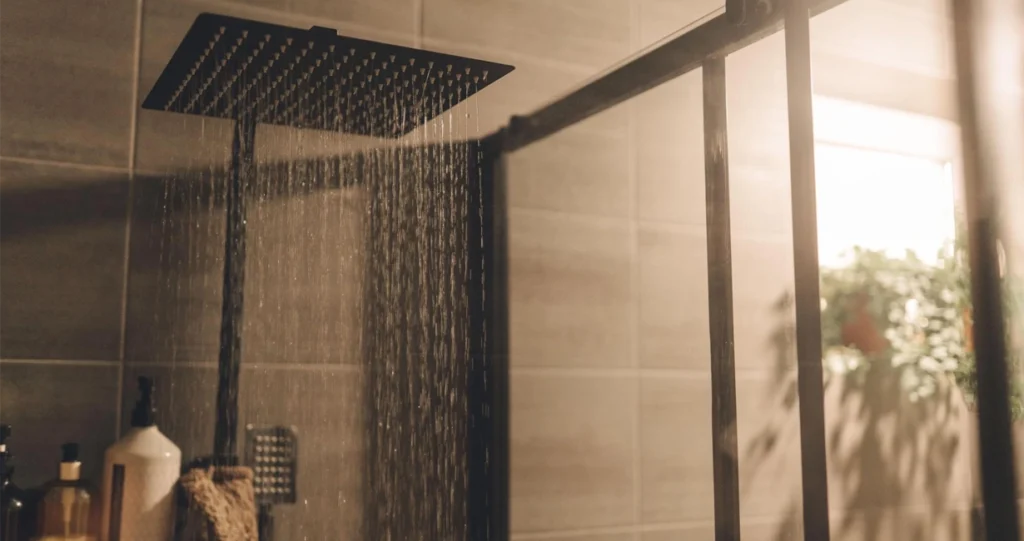
Pressure-optimized shower systems improve spray strength by concentrating water flow more efficiently through specialized nozzle designs.
The key to understanding how this works is the difference between water pressure and water flow. A shower system cannot increase the PSI (pounds per square inch) your home plumbing delivers. But it can use that available PSI more efficiently — concentrating the flow through smaller, precision-engineered nozzles, removing internal flow restrictors, and using air-infusion technology to increase perceived spray force without increasing actual water volume.
This guide covers the five best shower systems for low water pressure in 2026 — each evaluated specifically on how they perform in homes where PSI is limited. We compare nozzle design, spray concentration, durability, and real-world pressure performance so you can find the right system for your specific pressure situation.
Before you buy, it is worth checking your actual home water pressure. A gauge from any hardware store costs under $15 and connects to an outdoor hose bib. Knowing your PSI helps match the right system to your specific situation — our guide to how to choose a shower system covers pressure testing in detail.
Check These Before Buying a New Shower System
Before replacing your shower system entirely, spend five minutes checking these three common causes of reduced pressure. Any one of them can cut your shower pressure significantly — and fixing them costs nothing.
Mineral buildup in the shower head nozzles. Hard water deposits accumulate in the spray nozzles over time, partially blocking individual jets and reducing overall flow. Remove your current shower head and soak it in white vinegar for 30–60 minutes, then scrub the nozzle face with an old toothbrush. If pressure improves noticeably after cleaning, the issue was mineral buildup rather than your home’s water supply.
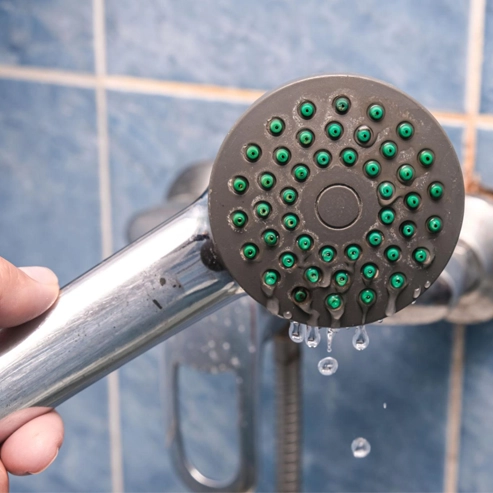
Mineral deposits in shower nozzles are one of the most common — and most overlooked — causes of reduced shower pressure.
Flow restrictor inside the shower head. Most shower heads sold in the US include a plastic flow restrictor disc inside the connection fitting — a water-saving device that limits maximum flow rate regardless of your home’s actual pressure. Removing it is simple: unscrew the shower head from the arm, pull out the small plastic disc from the fitting with needle-nose pliers, then reinstall. This alone often increases perceived pressure by 20–30% with no other changes.
Partially closed shut-off valve. The shut-off valve for your shower supply line — typically accessible through an access panel or under the sink in an adjacent room — may be partially closed. A valve only halfway open reduces water flow to the shower significantly. Turn it fully counterclockwise to ensure maximum flow before concluding that your pressure is genuinely limited.
If none of these quick fixes resolve the issue, your home water pressure is the underlying cause and a pressure-optimized shower system is the most effective solution available without plumbing work.
Quick Picks — Best Shower Systems for Low Water Pressure
| System | Best For | Type | Min. PSI | Flow Rate | Price Range |
|---|---|---|---|---|---|
| Speakman S-2252 | Extreme low pressure | Fixed head | 20 PSI | 2.0 GPM | $40–$80 |
| AquaDance 2-in-1 | Dual flexible use | Rain + Handheld | 25 PSI | 2.5 GPM | $35–$70 |
| HammerHead | Long-term durability | Handheld | 20 PSI | 2.0 GPM | $60–$110 |
| SparkPod Rain | Budget moderate pressure | Rainfall | 40 PSI | 2.5 GPM | $20–$45 |
| Moen Engage Magnetix | Premium daily comfort | Handheld | 30 PSI | 2.0 GPM | $60–$130 |
1. Speakman S-2252 Signature Shower Head — Best Overall for Low Water Pressure
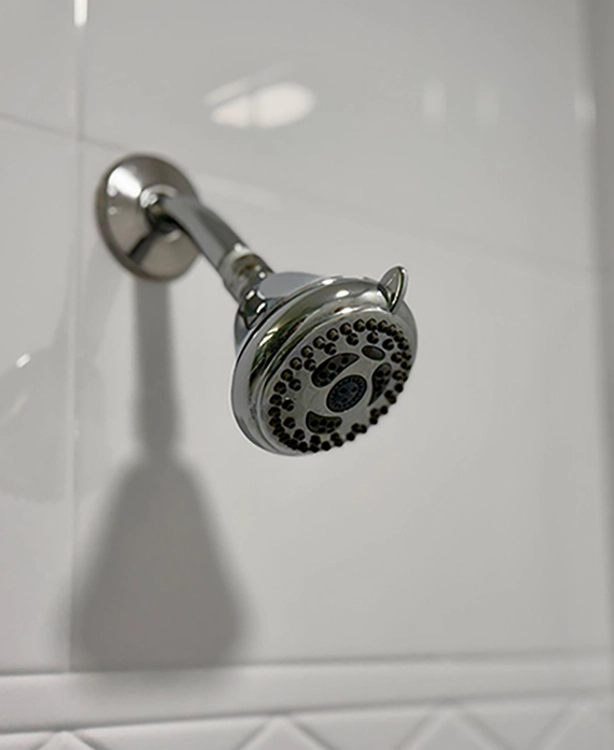
Compact high-pressure shower heads concentrate water into narrower spray channels to deliver a stronger stream at lower PSI.
Speakman is the brand most consistently recommended by plumbers for low water pressure environments — and the S-2252 Signature is the specific model that earned that reputation. The engineering focus behind this shower head is singular: deliver maximum perceived spray force from minimum available pressure. Speakman achieves this through their Anystream 360 technology, which uses 48 individual spray nozzles arranged to concentrate water into a defined spray pattern rather than dispersing it across a wide surface area.
The practical result is significant. At 20 PSI — a pressure level where most rainfall shower heads produce a weak, unsatisfying trickle — the Speakman S-2252 delivers a spray that feels genuinely strong and consistent. The concentrated nozzle pattern maintains spray force even when pressure drops during household water use elsewhere. This makes it the most reliable performer in genuinely low-pressure homes where pressure fluctuates unpredictably throughout the day.
The construction is solid brass internal components with a chrome-finished outer body — not plastic, which is the material choice of most budget competitors and the reason those products degrade in performance and appearance within 18–24 months. The solid brass internals maintain spray consistency over years of daily use without the mineral deposit accumulation that clogs plastic nozzle systems faster in hard water areas.
At $40–$80, the Speakman S-2252 is the most cost-effective upgrade available for a genuinely low-pressure bathroom. It does not require any plumbing modification, installs in under five minutes on any standard ½-inch arm connection, and delivers an immediately noticeable improvement in shower quality over any standard residential shower head in the same pressure environment.
- Works at 20 PSI — lowest minimum in this guide
- 48 Anystream nozzles — maximum spray concentration
- Solid brass internals — long-term performance
- 5-minute installation on standard arm
- Most recommended brand by professional plumbers
- Fixed head only — no handheld flexibility
- Basic design — not aesthetically premium
- Limited finish options
2. AquaDance High Pressure 2-in-1 Shower System — Best Dual System
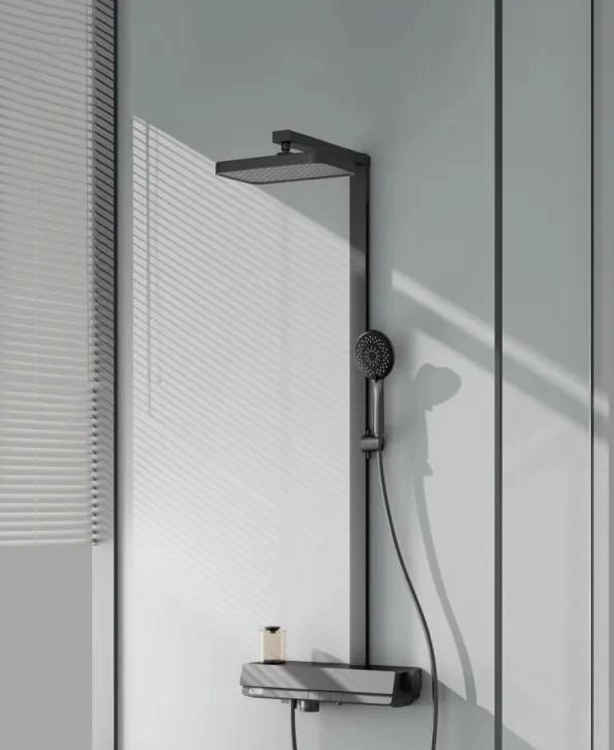
Dual shower systems provide coverage flexibility — use the rainfall head for body coverage and the handheld for targeted pressure.
The AquaDance 2-in-1 solves one of the most common low-pressure dilemmas: the trade-off between rainfall coverage and spray strength. A standard rainfall head in a low-pressure home spreads water across a large surface area, creating a coverage experience that feels thin and unsatisfying. A compact pressure-optimized head like the Speakman delivers strong spray but no wide coverage. The AquaDance gives you both — a rainfall overhead head for coverage and a high-pressure handheld unit for targeted, stronger spray — with the ability to switch between them or run both simultaneously.
The diverter valve is the key component that makes this system work effectively. AquaDance’s three-way diverter allows you to run the overhead only, the handheld only, or both simultaneously. When running both at lower pressure, the flow is divided between the two heads — which reduces individual spray force but increases total body coverage. Running one head at a time concentrates full available pressure into a single spray pattern for maximum force. This flexibility means you can adapt to what your pressure allows on any given day.
Both heads in the AquaDance system are removable for soaking in vinegar for mineral buildup cleaning — a practical maintenance advantage in hard water areas where clogging is the most common performance issue. The system installs on any standard shower arm without tools beyond basic hand-tightening, making it one of the fastest two-head upgrades available at any price.
At $35–$70, the AquaDance represents exceptional value for a dual shower system. The construction is not all-metal like the Speakman or HammerHead — the outer body is chrome ABS plastic — but the internal pressure-optimization engineering makes it perform well above its price tier in low-pressure conditions.
- 3-way diverter — rain, handheld, or both
- Solves coverage vs pressure trade-off
- Easy tool-free installation
- Removable heads for vinegar cleaning
- Best value dual system in this guide
- ABS plastic body — less durable than metal
- Running both heads simultaneously reduces force
- Needs 25+ PSI for good performance
3. HammerHead All Metal Shower Head — Best for Long-Term Durability
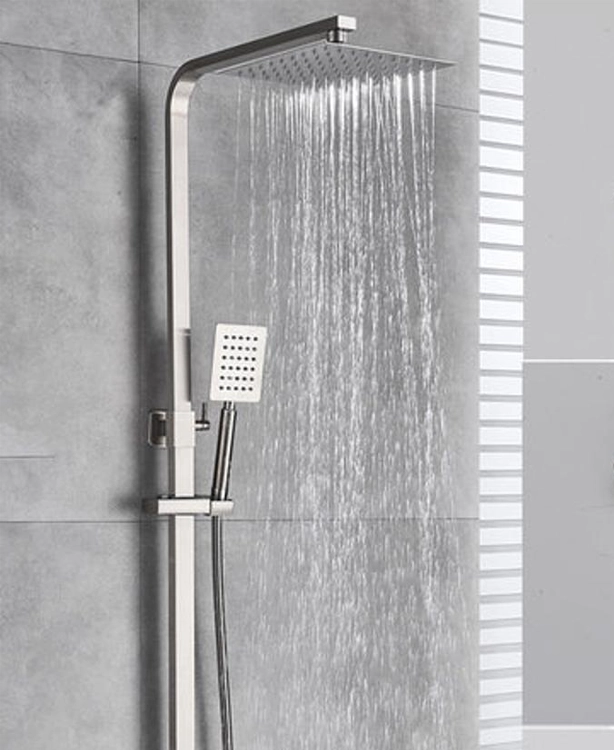
All-metal shower heads maintain internal performance and spray consistency significantly longer than plastic alternatives under daily use.
HammerHead built their shower head brand around a single point of differentiation from the crowded Amazon shower head market: full stainless steel and metal construction where every competitor uses plastic. This matters specifically in the context of low water pressure for one reason that most buyers overlook — plastic shower heads lose performance faster than metal ones as internal components degrade and nozzle geometry changes under daily pressure cycling.
In a low-pressure environment, the shower head is already working at the edge of its minimum performance range. When plastic components warp slightly under temperature cycling, or when nozzle channels expand minutely over months of use, the performance loss in a low-pressure system is proportionally more noticeable than it would be in a high-pressure installation where headroom exists to absorb degradation. HammerHead’s metal construction eliminates this performance decay almost entirely — the spray pattern and force consistency you get on day one are maintained for years of daily use.
The pressure-optimized nozzle design delivers strong spray performance from 20 PSI — comparable to the Speakman in pressure minimum — with the added durability advantage that comes from all-metal construction. The handheld configuration makes it more versatile than the fixed Speakman for users who need to rinse specific areas or have mobility considerations that make a fixed head less practical.
At $60–$110, the HammerHead is priced above the Speakman and AquaDance but below the Moen. For buyers who plan to stay in their home for 5+ years and want a low-pressure shower solution that does not need replacing within 2–3 years, the durability investment is worthwhile over the longer ownership horizon.
- Full stainless steel and metal construction
- Performance maintains over years of daily use
- Works at 20 PSI — same as Speakman
- Handheld flexibility vs Speakman fixed head
- Resistant to hard water degradation
- Higher price than Speakman or AquaDance
- Fewer finish options than Moen
- Less brand recognition than Speakman
4. SparkPod Rainfall Shower Head — Best Budget Option for Moderate Pressure
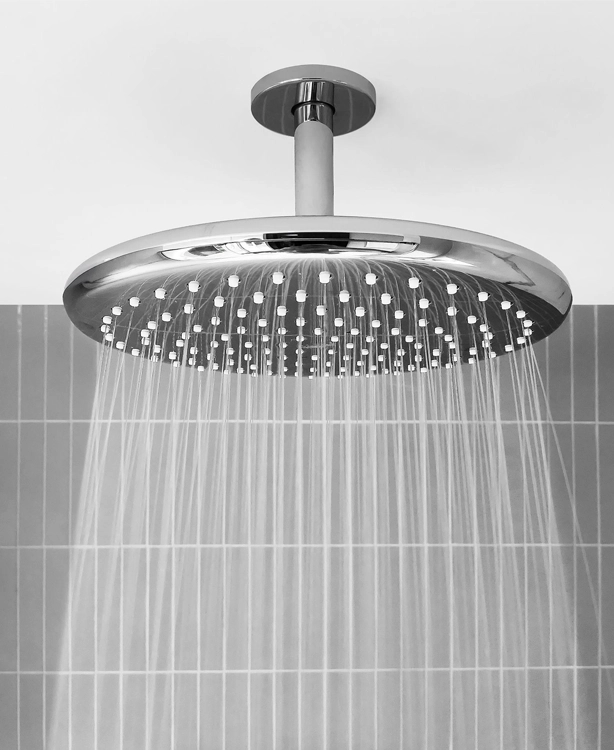
Rainfall shower heads provide wider coverage but require at least moderate pressure to deliver a satisfying shower experience.
The SparkPod earns its place in this guide with an important qualification that must be stated upfront: it is not suitable for genuinely low water pressure homes below 40 PSI. It belongs here specifically for buyers who have moderate-low pressure (40–55 PSI) and want a rainfall shower experience on the smallest possible budget.
At $20–$45, the SparkPod makes rainfall-style showering accessible to the widest possible range of budgets. The wide-face rainfall head design delivers decent coverage at moderate pressure, and the installation is as simple as it gets — standard ½-inch connection, hand-tighten only, no tools required. It is genuinely quick to install and delivers a noticeable coverage improvement over a standard residential shower head for homes where pressure is adequate.
The honest performance limitation is the physics of rainfall head design. SparkPod’s wide face distributes water across a larger surface area — which creates the coverage feeling that makes rainfall heads appealing — but that distribution reduces spray force per square inch at the nozzle level. In a home with 40 PSI, this is acceptable. In a home with 30 PSI or below, the SparkPod will produce a shower that feels thin and unsatisfying compared to the concentrated spray designs of the Speakman, HammerHead, or even the AquaDance’s handheld mode.
For rental properties, guest bathrooms, or any situation where the goal is a rainfall aesthetic at absolute minimum cost in a home with adequate pressure, the SparkPod delivers reasonable value. For the core audience of this guide — genuinely low-pressure homes — the Speakman or AquaDance are more appropriate choices.
- Lowest price in this guide
- Good rainfall coverage at 40+ PSI
- 5-minute no-tool installation
- Wide head size for coverage
- Needs 40+ PSI — not for very low pressure
- Plastic construction — degrades faster
- Weak spray feel below 40 PSI
- Not suitable as primary low-pressure solution
5. Moen Engage Magnetix Shower Head — Best Premium Option
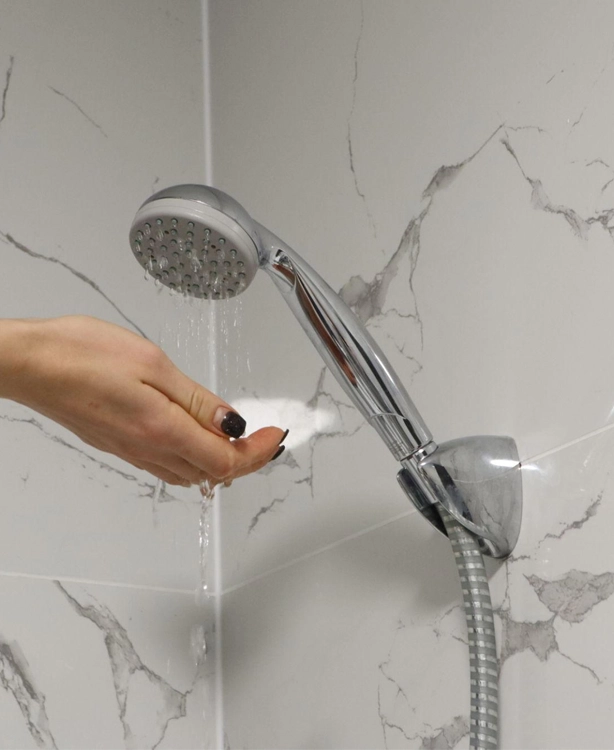
Premium handheld shower heads with magnetic docking combine ease of use with reliable pressure performance for everyday comfort.
The Moen Engage Magnetix brings Moen’s engineering quality and brand reliability into the low-pressure shower head category, adding the Magnetix magnetic docking system as its standout feature. The magnetic connection means the handheld unit snaps back into its holder precisely and securely every time — eliminating the fumbling with clip-style holders that is a common daily irritation with generic handheld systems. For users who switch frequently between using the handheld and leaving it in its fixed position, this quality-of-life improvement is immediately noticeable.
The spray performance at lower pressure is genuinely solid for a handheld system. Moen’s nozzle engineering in the Engage series maintains consistent spray quality down to 30 PSI across most of its six spray modes — including the power spray mode which concentrates flow for maximum force, and the pause mode which reduces flow to a trickle for soap application. The spray mode variety gives users meaningful control over how available pressure is used, which is more valuable in a low-pressure environment than in a standard-pressure home where any setting performs adequately.
The construction uses Moen’s standard quality materials — solid brass connection fittings, metal internal components, and a durable chrome or brushed nickel finish backed by Moen’s lifetime limited warranty. The warranty coverage is a meaningful advantage over budget options in this category — if the shower head develops a leak or spray inconsistency, Moen’s no-questions-asked warranty replacement process provides a level of after-purchase support that AquaDance and SparkPod do not match.
- Magnetic docking — easiest handheld use
- 6 spray modes including power spray
- Works well from 30 PSI
- Moen lifetime limited warranty
- Solid brass fittings and metal internals
- Highest price in this guide
- Not as concentrated as Speakman at very low PSI
- Requires 30+ PSI for full mode performance
How to Choose the Right Shower System for Low Water Pressure
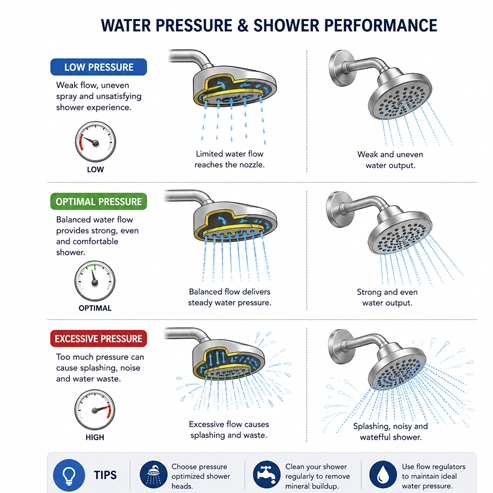
Pressure-optimized nozzles improve spray force by concentrating flow through smaller channels — without increasing actual water pressure.
Step 1 — Know Your Actual PSI
Before choosing any shower system, test your actual home water pressure. A gauge from any hardware store costs under $15 and attaches to an outdoor hose bib. Run it with the shower and one other fixture active simultaneously to get your realistic in-use pressure reading.
- Below 30 PSI: Speakman S-2252 or HammerHead — only these are engineered for this pressure range
- 30–40 PSI: AquaDance dual system or Moen Engage Magnetix — good performance range for these systems
- 40–55 PSI: Any system in this guide — SparkPod rainfall becomes viable at this range
- Below 20 PSI consistently: Consider a pressure-boosting pump alongside a pressure-optimized head
Step 2 — Choose Head Type Based on Your Priority
The head type determines whether you get concentrated spray force or wide-area coverage — and in a low-pressure environment, you typically cannot get both from a single head at the same time.
- Maximum spray force: Fixed compact head — Speakman concentrates all available pressure into a powerful stream
- Flexibility: Dual system — AquaDance gives you coverage when you want it and force when you need it
- Coverage feel: Rainfall head — only viable at 40+ PSI, SparkPod is the budget option here
- Daily convenience: Handheld with magnetic docking — Moen Engage Magnetix for easy use and quality
Step 3 — Avoid Oversized Rainfall Heads at Low Pressure
A 12-inch or larger rainfall head in a home with under 40 PSI will always disappoint. The physics are straightforward — the same volume of water spread across a 12-inch head surface produces less spray force per nozzle than across a 6-inch head surface. If rainfall coverage is what you want but pressure is limited, the AquaDance dual system is the most practical solution — use the rainfall head at acceptable-coverage force and the handheld for targeted strength.
Step 4 — Consider a Pressure-Boosting Pump for Very Low PSI
If your home consistently measures below 20 PSI, even the best pressure-optimized shower heads will struggle to deliver a satisfying shower. In this situation, a small electric pressure-boosting pump installed on the shower supply line is the most effective solution — typically costing $150–$400 installed, it can increase available pressure by 15–30 PSI at the shower head. Combine a pressure booster with a Speakman or HammerHead and the shower performance improvement is dramatic. See our shower system choosing guide for more on pump-assisted setups.
Common Mistakes to Avoid When Buying for Low Water Pressure
- Choosing a large rainfall head without checking PSI. This is the most common mistake in low-pressure bathrooms. Rainfall heads that look impressive online require 40–50+ PSI to deliver the coverage and force shown in product photos. At 30 PSI they produce a weak, uneven drizzle that is more frustrating than a standard head in the same home.
- Removing the flow restrictor without considering water usage. Removing the flow restrictor increases spray force but also increases water consumption — typically from 1.8 GPM to 2.5 GPM or higher. In areas with water restrictions or high water rates, the additional cost may outweigh the pressure improvement. In standard residential situations it is a worthwhile trade-off, but it is worth knowing the impact before making the change.
- Buying cheap plastic systems expecting long-term performance. Budget plastic shower heads lose spray performance faster than metal alternatives as internal components degrade. In a low-pressure home where the head is already at the edge of its performance range, this degradation is more noticeable and frustrating. Investing slightly more in a metal-construction option like the HammerHead or Speakman is worthwhile for any primary bathroom.
- Not checking whether the issue is a clogged or restricted head first. Buying a new shower system when the existing one just needs cleaning or a removed flow restrictor is an unnecessary expense. Always perform the quick fixes outlined at the start of this guide before purchasing a replacement.
- Expecting a shower head to fix plumbing-level pressure problems. Pressure-optimized shower heads dramatically improve the shower experience in low-pressure homes, but they cannot exceed the limits of your home’s available water supply. If your home consistently runs below 20 PSI, a pressure-boosting pump is the right long-term solution — a shower head alone will not fully compensate for that level of pressure deficit.
Frequently Asked Questions — Shower Systems for Low Water Pressure
Can a shower head actually improve low water pressure?
A shower head cannot increase the PSI your home plumbing delivers — that is determined by your water supply system. What a pressure-optimized shower head can do is use available pressure more efficiently. By concentrating water flow through smaller, precision-engineered nozzles and removing internal flow restrictors that standard shower heads include, pressure-optimized designs deliver significantly stronger, more focused spray from the same available PSI. The Speakman S-2252 in particular is engineered specifically to maximize spray force at the lowest possible pressure — homes that switch to it from a standard shower head in the same low-pressure condition typically report an immediately noticeable improvement.
What is considered low water pressure for a shower?
Standard residential water pressure in North America ranges from 40–80 PSI. Pressure below 40 PSI is considered low for shower performance, and pressure below 30 PSI is genuinely problematic — most standard shower heads will feel weak and unsatisfying at this level. Pressure below 20 PSI requires either pressure-optimized specialized shower heads like the Speakman or HammerHead, or a pressure-boosting pump system. You can measure your home pressure with a gauge attached to an outdoor hose bib, costing under $15 at any hardware store.
Are rainfall shower heads bad for low water pressure?
Standard rainfall shower heads with large head diameters (10 inches and above) perform poorly below 40 PSI — they spread available water across too wide a surface area, resulting in a thin, weak spray that covers a lot of ground but delivers little actual pressure. Compact pressure-optimized rainfall designs (8 inches and below) perform better at lower pressure, and dual systems like the AquaDance that combine a smaller rainfall head with a handheld unit offer the best compromise — you can use the rainfall head when pressure is adequate and the handheld for stronger, targeted spray when you need more force.
Should I remove the flow restrictor from my shower head?
Removing the flow restrictor is one of the most effective free improvements for a low-pressure shower and is completely legal in most US states — though some states with water restrictions limit maximum residential flow rates. The restrictor is the small plastic disc inside the shower arm connection that limits flow to 1.5–2.0 GPM regardless of available pressure. Removing it allows full available pressure and flow rate to reach the nozzles. In a low-pressure home, this translates to a noticeably stronger spray. The trade-off is a 20–30% increase in water usage per shower.
What else can I do to improve shower pressure besides replacing the shower head?
Beyond replacing the shower head, four steps can improve shower pressure in most homes: clean mineral deposits from existing nozzles with vinegar soaking; remove the internal flow restrictor; ensure the supply shut-off valve is fully open; and check for any kinked or partially blocked supply lines behind the shower wall. If all these steps are taken and pressure is still inadequate, a small electric pressure-boosting pump installed on the shower supply line — costing $150–$400 installed — provides the most effective mechanical improvement short of full plumbing upgrades. For a complete step-by-step approach, see our shower system choosing guide.
Final Verdict — Best Shower System for Low Water Pressure in 2026
For homes with genuinely low water pressure — below 35 PSI — the Speakman S-2252 is the clearest recommendation. Its 48-nozzle Anystream pressure-concentrating design, 20 PSI minimum operating pressure, and solid brass internals make it the most effective low-pressure shower head upgrade available at its price point. Install it, remove the flow restrictor, and the shower improvement in a low-pressure home is immediate and significant.
For households that want flexibility alongside pressure performance, the AquaDance 2-in-1 is the most practical dual system available under $70. The three-way diverter gives you rainfall coverage when pressure allows and concentrated handheld spray when you need it — the most versatile solution for homes with inconsistent pressure or multiple users with different shower preferences.
For long-term durability in a primary bathroom — particularly in hard water areas where mineral buildup and degradation are ongoing concerns — the HammerHead’s all-metal construction maintains performance over 5–10 years where plastic alternatives begin declining within 2–3. For premium comfort with Moen’s warranty backing, the Moen Engage Magnetix brings brand-quality engineering and magnetic docking convenience to the low-pressure handheld category.
And if your home runs at moderate pressure (40–55 PSI) and rainfall aesthetics on a minimal budget are the goal, the SparkPod delivers — just not below 40 PSI, where the other four options serve you far better.
For related reading, see our best rainfall shower systems under $500 for full system options at standard pressure, our Kohler vs Moen shower systems comparison for brand-level decisions, and our are rainfall systems worth it guide for an honest assessment of whether rainfall is the right choice for your specific bathroom.